
When I decided to inform my family of my aspiration to attend seminary in 2017, one of my cousins reminded me that her pastor earned only 2,500 Haitian gourdes a month. Seeking more insight from someone with experience, I shared my passion with a friend who is a pastor. He asked why I didn’t go to a university to pursue a different degree instead. Even after I completed my Bachelor’s degree at the Seminaire de Théologie Evangélique de Port-au-Prince (STEP), a close family member asked me, “What will you do with your future?” Many pastors, theologians, and church ministers are reluctant for their own children to pursue pastoral ministry, full-time gospel ministry, or seminary education. In 2005, the Gallup organization conducted a survey of 1,028 teenagers between the ages of 13 and 17, asking them for their top three career aspirations. The teens chose careers such as teaching, medicine, law, sports, science, or architecture—almost any field of study except becoming a pastor. Apostle Paul, on the other hand, asserts that whoever aspires to be a pastor, elder, or bishop desires a noble task (1 Timothy 3:1).
Since Scripture prohibits immature people from serving as pastors (1 Timothy 3:6), churches and evangelical seminaries are ideal institutions that must work together to prepare the next generation of Christian leaders (2 Timothy 2:2). Thus, the senior pastor of any church must lead the congregation in maintaining two specific priorities to ensure it remains healthy until Christ returns. First, discipleship is the pivot of all growing churches. Discipleship involves sharing the Gospel of Jesus Christ with unbelievers; when they believe that Jesus, who is God, became man, died on the cross, was buried, and was resurrected on the third day (1 Corinthians 15:1-3), they become disciples. The church must then continue teaching these new converts to help them mature in the knowledge of Jesus Christ (Colossians 1:28); I am convinced this is what Jesus intended when He commanded the eleven disciples to go and make disciples of all nations (Matthew 28:19-20). In fact, discipleship is the primary way a pastor can help the church remain healthy beyond his own leadership.
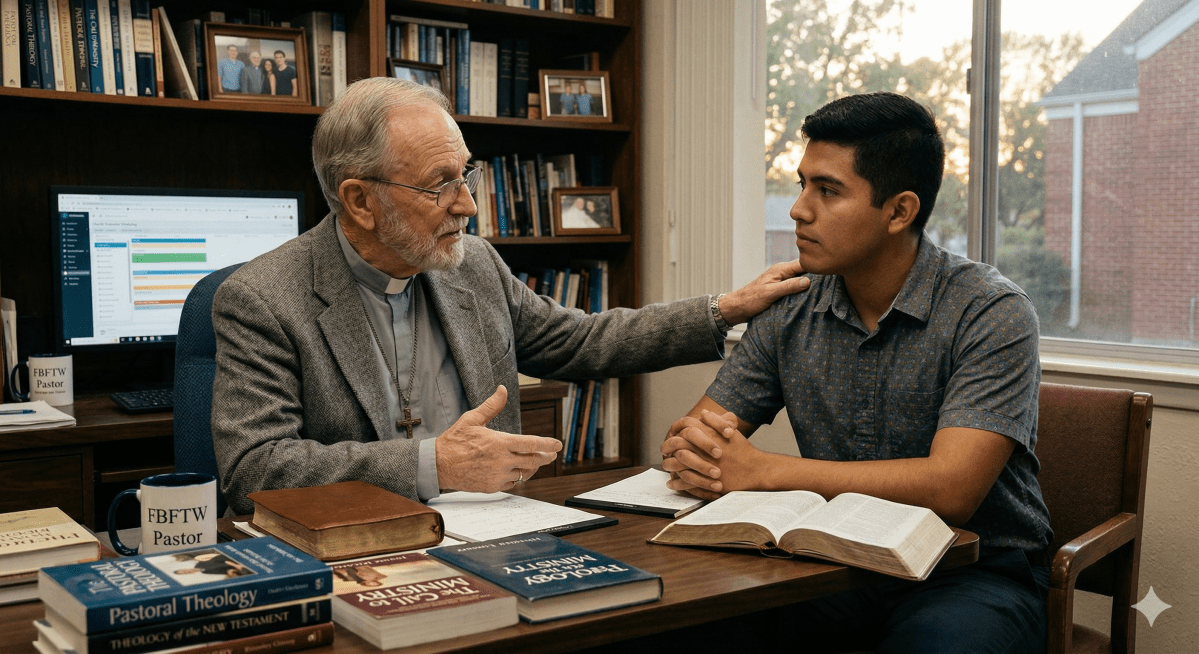
While discipleship is the pivot of a healthy church, a faithful pastor must also see discipleship as a foundation for a second, crucial task: preparing the next generation’s church leaders (2 Timothy 2:2). Jesus never intended the gospel to be known only by His generation; He even prayed for those who would believe in the future (John 17:20). How did the triune God intend people to believe in the gospel of Jesus Christ and be saved? The answer is simple: the hearing of the gospel from a called preacher (Romans 10:13-17). Thus, the first task of a senior pastor is to identify within his church faithful and competent Christians who are called to full- or part-time ministry (2 Timothy 2:2). Then, following the example of Paul, who mentored Timothy, senior pastors must spend time mentoring them. Moreover, churches need to develop programs that encourage believers called to ministry to pursue seminary education. After faithfulness and competency, a willingness to pursue seminary education is a demonstration of commitment that someone is called to ministry. Since the early church, certain training (mostly informal compared to modern schooling) has been crucial for ministers (Acts 1:21-22; 20:17-38). Even the apostle Paul needed an accurate gospel education from experienced Christian leaders (Galatians 1:18; 2:1-2). Therefore, the senior pastor should encourage anyone called to ministry to pursue theological education in a seminary. What about the responsibilities of seminaries in preparing church leaders?
Seminaries have a profound impact on churches because they prepare the individuals who will lead main decisions in the churches. Therefore, certain aspects must be highlighted if a seminary wants to be found faithful when Christ returns. First, it must maintain a strong curriculum that helps students correctly handle the word of truth and develop an intimacy with Jesus Christ (2 Timothy 2:15; Psalm 1). Thus, they will be both excellent in terms of exceptional competence and possess the character necessary for their calling. Second, seminaries are responsible for instilling a culture that values discipleship and the mentoring of Christians who want to pursue seminary education. They should also teach seminarian students how to advocate for their own training and future ministry, equipping them to help the churches understand the financial and missional necessity of supporting seminarians. Nowadays, churches are tempted to abandon the Great Commission to focus on popularity and secondary issues. Churches need to recognize the necessity of supporting seminarians as the next generation of Christian leaders. Therefore, seminary faculties should incorporate into their courses how crucial it is for churches to maintain discipleship and support these future leaders.
While I do not intend to enter the debate regarding the tithe in Malachi 3, the underlying universal principle is that we can, in fact, rob God. Specifically, churches may be said to defraud God when they do not steward their finances according to His revealed purposes (Matt 28:19-20; Gal 6:6; 1 Tim 5:17-18). Many churches do not have a budget or plan to spend a penny on discipleship, missions, or financial aid for those called to do ministry who are pursuing seminary education. Churches must revise their understanding of God’s will, which is to make the name of Jesus known until He returns. Churches can do that in two ways: through discipleship (missions), and by supporting seminarians, pastors, Bible teachers, preachers (Gal 6:6; 1 Tim 5:17-18; 1 Cor 9:11-14). Since Jesus encourages every Christian, church, and institution: “make friends for yourselves by means of unrighteous wealth, so that when it fails they may receive you into the eternal dwellings” (Luke 16:9). To evaluate your church or institution, ask these questions: How much money do I plan to contribute to discipleship, evangelism, and missions? Do I invest my time and finances to help train the next generation of pastors and Christian leaders? Do I support Bible teachers, preachers?

 Youbendjy Dorvilier